
Your Brain Builds the Relationship: Mind’s Influence
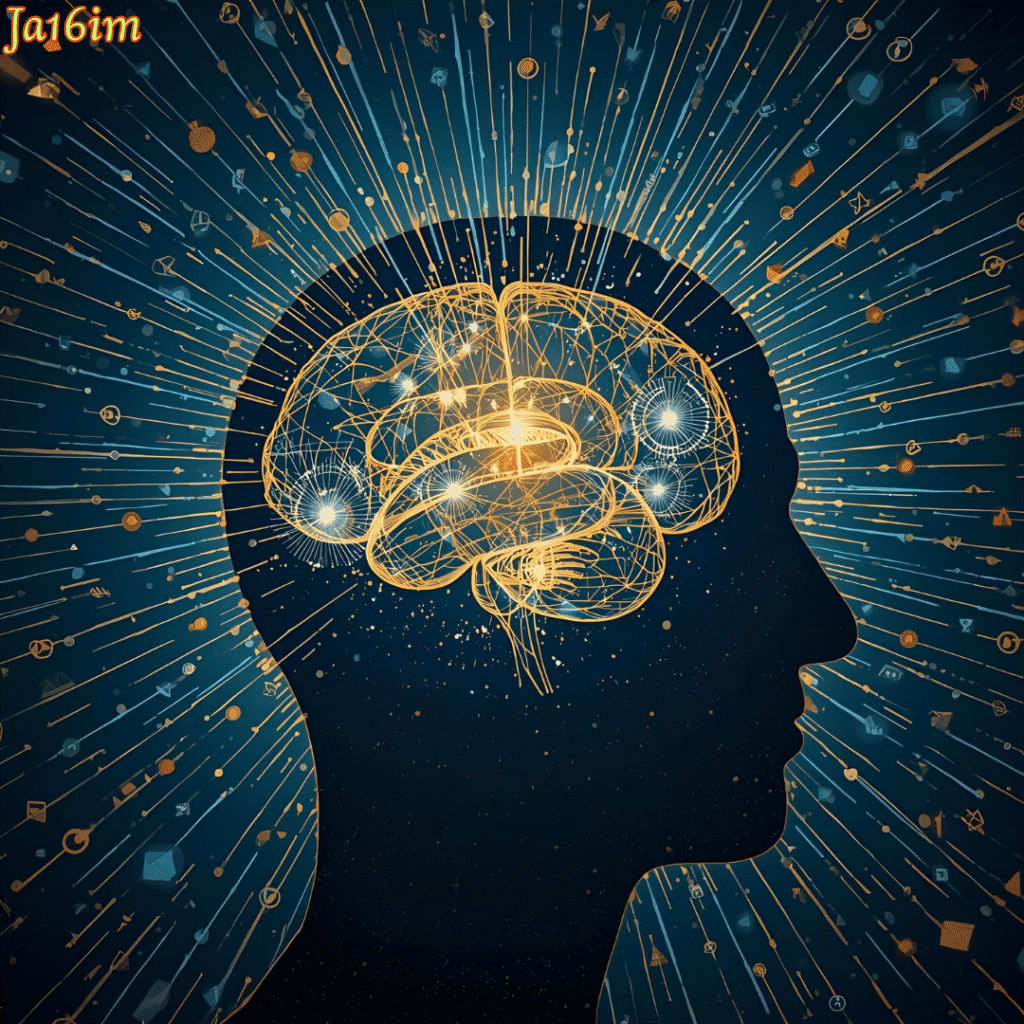
We tend to believe that relationships are built upon external interactions: exchanged words, shared events, or declared understandings. However, the deeper truth is that a **relationship is first and foremost a mental phenomenon**. It is a space where two internal worlds intersect, and what determines the quality and sustainability of this connection is not what the partner does, but what **our mind** does in interpreting their behavior and anticipating their intentions. The human mind, with its complex mechanisms and past experiences, is the hidden architect that maps the course of connection, either toward mutual growth or toward alienation.
The other person is not a mirror of their personality, but a mirror of the unprocessed contents of our own mind.
🧠 1. The Mind as a Mirror: Projection and Pattern Repetition
The mechanism of projection is one of the most powerful ways the mind influences relationships. We do not see the other person as they are; instead, we see them through the lens of our unresolved experiences and deep fears, often referred to in psychology as “The Shadow”:
- Repeating Old Scenarios: The mind tends to choose partners (or interact with colleagues) in ways that reflect old patterns from childhood or previous relationships. We subconsciously search for an opportunity to “correct” failed patterns, rather than establishing a truly new connection.
- The Dual Ego Effect: The Ego fuels the need to be “right” and to protect the self, escalating minor disagreements into existential conflicts. A healthy relationship begins when the mind can separate self-worth from the worth of an opinion.
💡 2. The Architecture of Interpretation: The Emotional Perception Gap
Every action or word from a partner passes through
The mind’s personal filters before it is “received” as an emotional message:
- Jumping to Conclusions (Mind Reading): A stressed or insecure mind tends to assume negative or malicious intentions without evidence. It does not ask; it interprets silence as disinterest, or preoccupation as neglect. This rapid interpretation kills the relationship before it has a chance to fully express itself.
- Confirmation Bias: Once the mind decides that the partner is “uninterested” or “untrustworthy,” it consciously or unconsciously searches for evidence that confirms this belief and ignores counter-evidence. The mind here does not discover reality; it manufactures it.
- The Meta-Message: Spoken language represents only a fraction of communication. The larger part lies in the meta-message our mind sends: the tone of voice, body language, and non-verbal energy, which often reveal the true nature of how we feel about the relationship.
Mind – Relationships
✨ 3. The Conscious Mind: The Power of Intention and Transformation
A conscious and trained mind can transform from an architect of demolition into an architect of construction in a relationship:
- Choosing Response Over Reaction: Healthy relationships require a “cognitive pause” between the stimulus (the partner’s action) and our reaction (our response). This pause allows the conscious mind (the Higher Self) to intervene and choose a response based on love and understanding, rather than a defensive reaction based on fear.
- Mindfulness in Relationships: Practicing conscious presence in a relationship means stripping away pre-conceived notions and stereotypes, and striving to “see” the partner as they are in the present moment, freed from the memory of the past. This presence creates a safe space for genuine growth.
- Redefining Belonging: The mind can choose to see the relationship not as a source of personal entitlement or happiness, but as a space for “unconditional giving” and “mutual growth.” This shift in intention removes existential pressure from the partner and transforms the relationship into a more resilient and powerful entity.
In conclusion
your relationship with others begins and ends in your mind. It is influenced by memory, defined by interpretation, and saved by conscious will. Improving your external relationship first
And foremost requires improving your internal relationship with the thoughts and expectations you hold about love and connection. The relationship is our eternal invitation to master the self.
Remember: Meaning is the journey itself, not the destination. And the meaning we create is what immortalizes us.
Writing and Contemplation: Jassim Alsaffar
Digital Identity: Ja16im
A contemplative artist and philosophical writer exploring the symbolism of perception
And meaning through digital art, bilingual books, and contemplative scientific articles.
- Limits of Human Cognition: Why Truth May Be Beyond the Mind
- Limits of Human Cognition: Cognitive Closure and Hidden Reality
- The Event Horizon of the Mind: What the Brain Cannot Imagine
- Beyond Earth: Can Humanity Become an Interstellar Species?
- The Final Sunset: What Happens to Humanity When the Sun Dies?
