
How the Brain Engineers Reality
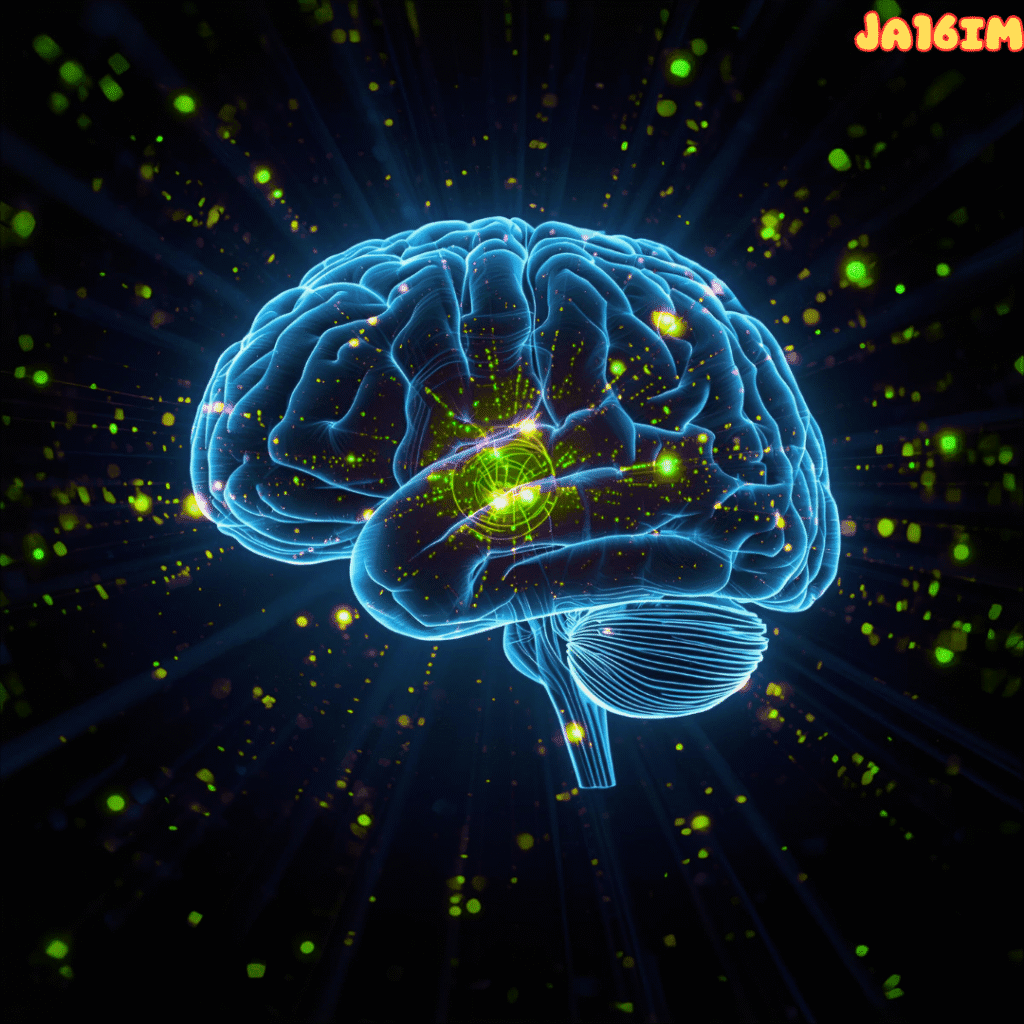
We navigate life believing our eyes are transparent windows viewing the world exactly as it is. We trust our senses to deliver the “truth.” However, modern neuroscience reveals a different story: what we see is not a recording of reality, but an active construction by the brain.
The question is biological as much as it is philosophical: Why does the brain process reality differently from physical truth? Why do we see the world not as it is, but as we need it to be?
We do not merely inhabit the world; the world, as we know it, inhabits us.
1. A Prediction Machine, Not a Camera
The brain does not function like a camera that captures and stores images. Instead, it operates as a “Prediction Machine.” According to the theory of Predictive Processing, the brain constructs internal models, anticipating what will happen next based on past experiences rather than passively waiting for sensory input.
What we experience as “reality” is a blend of:
- Sensory signals (light, sound).
- Internal expectations.
We do not see the present with absolute accuracy; we see our “prediction” of the present, adjusted by sensory data.
2. Survival Over Accuracy
Evolutionarily, the human brain did not evolve to perceive “absolute truth” or quantum physics. It evolved for survival. Physical truth is chaotic and filled with infinite data. Processing everything perfectly would consume immense energy and slow down our reactions.
Therefore, the brain filters reality. It sacrifices fidelity for efficiency. It amplifies contrast to spot fruit or dangers. Our reality is a simplified “User Interface” designed for survival, not for seeing the universe’s raw code.
3. Translation, Not Transmission
Scientifically, there are no “colors” or “sounds” in the external universe—only wavelengths and air compressions. The brain is the translator that converts these silent signals into conscious experience (Qualia).
When you see “red,” your brain is encoding a specific light wave into a sensory experience. The world outside is physically silent and dark; light and color are the internal language the brain uses to write reality.
4. Energy Efficiency and Auto-Filling
Consuming 20% of the body’s energy, the brain relentlessly seeks efficiency. It uses Heuristics, focusing on the center of vision and “filling in the blanks” of the periphery based on memory. The brain does not transmit reality; it reconstructs it at the lowest possible metabolic cost.
Conclusion: Consciousness as a Bridge
Understanding that the brain reconstructs reality deepens our human experience. It makes us humble regarding our personal “truths,” realizing that our perception is just one version of existence.
Actual reality exists, but perceived reality is a subjective journey—a biological process that transforms cold physics into meaning. We do not merely inhabit the world; the world, as we know it, inhabits us.
- Limits of Human Cognition: Why Truth May Be Beyond the Mind
- Limits of Human Cognition: Cognitive Closure and Hidden Reality
- The Event Horizon of the Mind: What the Brain Cannot Imagine
- Beyond Earth: Can Humanity Become an Interstellar Species?
- The Final Sunset: What Happens to Humanity When the Sun Dies?
