
Hidden Emotions: What Your Body Knows Before You Do
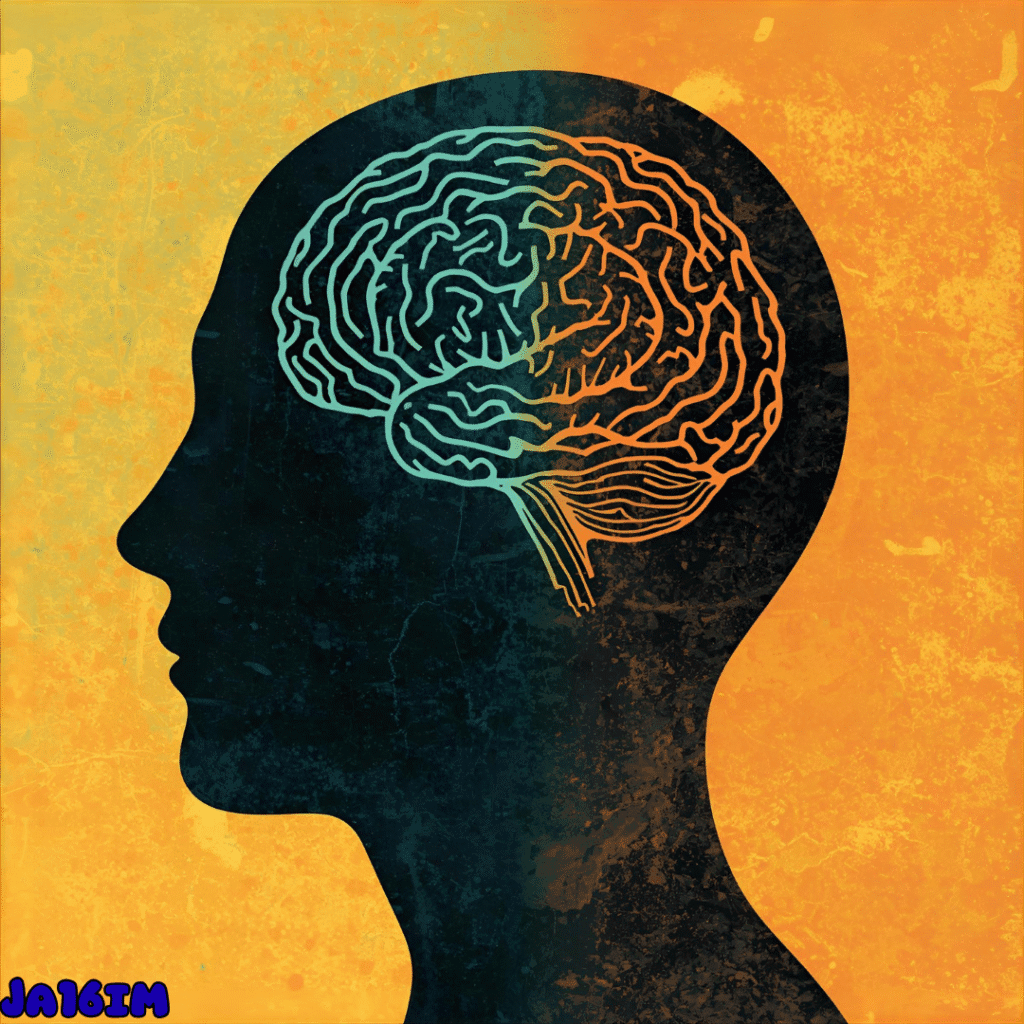
We often treat our emotions as absolute facts: “I am angry,” “I am sad,” “I am happy.” We assume that consciousness is the master, and that we only feel what we can name. However, science reveals a more complex biological reality: You feel many things your conscious mind knows nothing about.
Emotion is not a single event, but a cascade of biological reactions. What reaches the screen of your awareness is merely the “final report,” while deep processing occurs backstage, often remaining entirely hidden. How does this disconnect between the feeling body and the knowing mind occur?
You may think you are calm, while your body screams in a language you cannot yet hear.
1. The Body Speaks First: The Science of Interoception
Scientifically, emotion begins in the body, not in thought. The brain possesses a system called Interoception, responsible for monitoring your internal viscera: heartbeat, gut contraction, skin temperature, and muscle tension.
These signals flow to the brain constantly. When a situation arises, your body reacts instantly (heart races, stomach tightens) milliseconds before you consciously perceive any feeling. In that split second, your body is experiencing a full “emotional state,” yet your mind has not yet translated it into the word “fear” or “anxiety.”
2. The Low Road: Processing Without Awareness
Neuroscientist Joseph LeDoux identified what is known as “The Low Road” in the brain. This is a rapid neural pathway that transmits sensory information (like a threatening shadow) directly to the Amygdala, bypassing the thinking cortex entirely.
This means your brain and body can activate a full “fear” response—adrenaline release, pupil dilation, muscle readiness—without you having any conscious idea of what is happening. You are not “repressing” the emotion; rather, the emotion is occurring on a lower floor of the brain and simply hasn’t taken the elevator up to consciousness yet.
3. The Translation Gap: Affect vs. Emotion
Modern psychology distinguishes between Affect and Emotion:
- Affect: The raw biological data (comfort or discomfort, high energy or low energy).
- Emotion: The story your mind constructs to explain that data (e.g., “This discomfort is anger at my boss”).
The problem is that we are often poor translators. Your body may feel “low energy and gut tension” due to hunger or fatigue, but your mind misinterprets this raw data as “depression” or “existential dread.” The feeling is real, but the label is wrong. These are hidden emotions: genuine physiological states lost in translation.
4. Somatic Memory and Dissociation
In cases of trauma or chronic stress, the brain employs a defense mechanism known as Dissociation. To keep you functioning, the brain cuts the connection between interoceptive signals and conscious awareness.
The result? A person who appears incredibly calm and honestly says, “I am not stressed,” while their blood pressure is sky-high and cortisol levels indicate an emergency. Here, emotion is not suppressed in a poetic sense, but neurologically disconnected. The body carries the burden alone, while the mind lives in a bubble of false peace.
Conclusion: Listening to the Unspoken
The answer to “Do you feel things you don’t know about?” is a definitive scientific yes. We are complex biological organisms, and our consciousness is merely the tip of the iceberg.
The journey toward self-understanding requires more than just analyzing our thoughts; it requires developing “somatic intelligence”—the ability to listen to the body’s silent language before the mind intervenes with its labels. Sometimes, the truest fact about your emotional state is not found in what you think, but in the racing heartbeat or the heavy shoulders you have grown so used to that you no longer notice them.
- Limits of Human Cognition: Why Truth May Be Beyond the Mind
- Limits of Human Cognition: Cognitive Closure and Hidden Reality
- The Event Horizon of the Mind: What the Brain Cannot Imagine
- Beyond Earth: Can Humanity Become an Interstellar Species?
- The Final Sunset: What Happens to Humanity When the Sun Dies?
