
Memory of the Future: How the Brain Builds Tomorrow
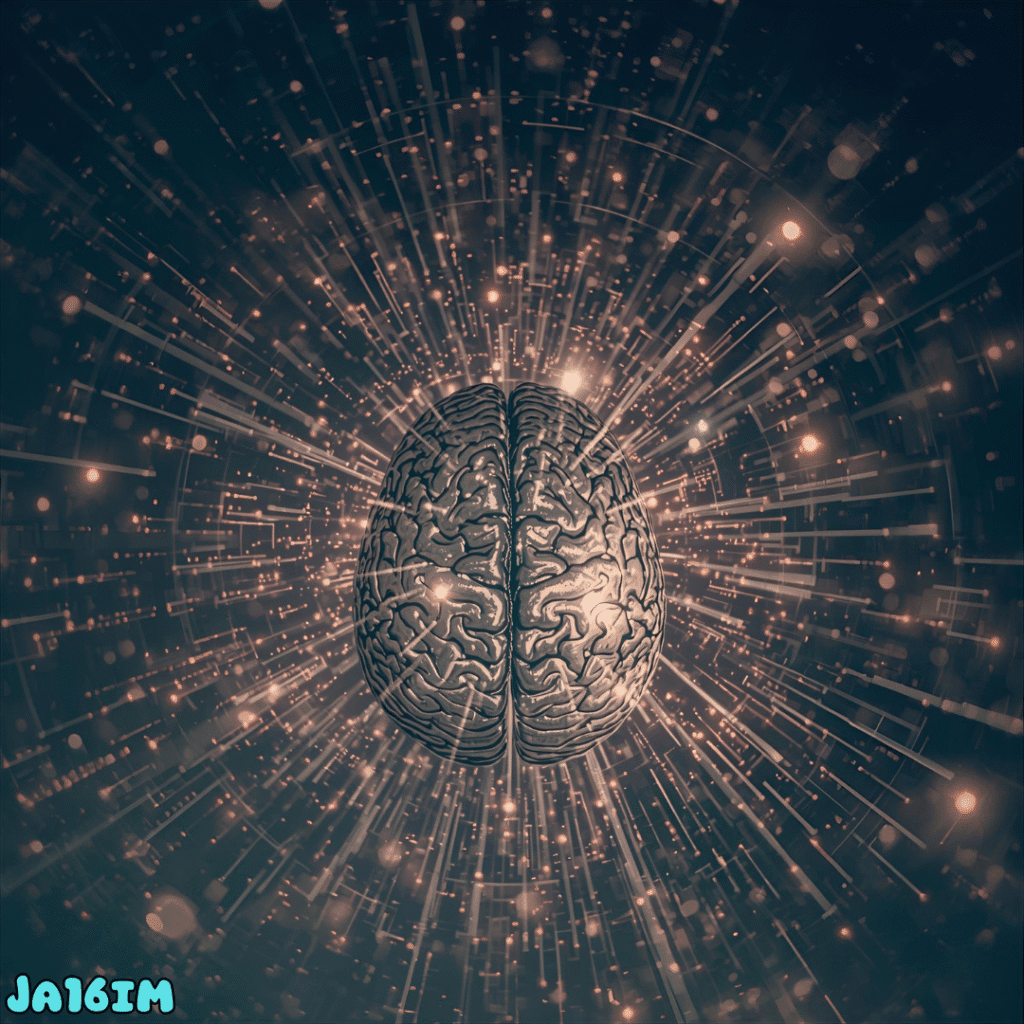
Of all living creatures, humans possess a unique, almost magical ability: the power to close our eyes and leap through time. We do not live trapped in the present moment; we travel to “tomorrow,” visualizing scenarios that have not occurred and feeling emotions for events that haven’t yet been born.
But neurobiologically, how can the brain—a mass of tissue locked in a dark skull—see a future that does not exist? Science reveals a stunning secret: We do not see the future; we remember the past and reassemble it.
1. The Hippocampus: The Mental Collage Artist
For years, scientists believed the Hippocampus was merely a librarian responsible for archiving past memories. However, fMRI studies have shown massive activity in this exact region when subjects are asked to imagine the future.
The leading scientific theory is now the “Constructive Episodic Simulation” hypothesis. It suggests that your brain does not have a “camera” for the future, but it has “Lego blocks” from the past. When you imagine a date or a job interview next week, the hippocampus deconstructs old memories (a person’s face, the smell of coffee, a feeling of anxiety) and stitches these fragments together to build a completely new scene. The future in your head is, quite literally, recycled past.
2. Why Amnesia Erases the Future
The strongest evidence for this organic link comes from patients with specific types of amnesia. Researchers found that people who lost the ability to remember their personal past also lost the ability to imagine their personal future.
When asked to visualize “tomorrow,” they see a blank void. This confirms a profound philosophical and scientific truth: We cannot imagine what we do not know. Our imagination is tethered by the boundaries of our experience. Every monster you conjure, every city you dream of, is a composite of images you have previously processed.
3. A GPS for Time
Neuroscientists (including the 2014 Nobel Prize winners) discovered “Grid Cells” in the brain’s entorhinal cortex. These cells act as an internal GPS, mapping space so we know where we are.
Surprisingly, the brain uses this same machinery to map time. The brain treats “time” as if it were spatial distance. When you imagine the future, you are effectively “navigating” your consciousness through a neural map, just as you navigate a room. To the brain, the future is a “place” we travel to mentally.
4. Why Do We Do It? (Simulating Pain)
Biologically, this immense effort is not for daydreaming; it is a survival machine.
Simulating the future allows us to “experience error” without paying the price. You can imagine jumping from a height, and your brain simulates the pain and fear, leading you to decide against it. You lived the experience and learned the lesson without suffering a single scratch. The brain is a sophisticated simulator testing probabilities to select the safest path for your body.
Conclusion: The Future is Handmade
Understanding this mechanism makes us realize that the future we fear or crave is not a fixed destiny. It is an internal “work of art” crafted by our brains based on our fears and past data.
We are the only beings with the luxury of living in two times: our bodies anchored in the present, our minds sailing the oceans of probability. The future is not a place we go to; it is an idea we build now, stone by stone, from the rubble of our memory.
Writing & Reflection: Jasem Al-Saffar
Digital Identity: Ja16im
A meditative artist and philosophical writer exploring the symbolism of perception and meaning through digital art, bilingual books, and speculative scientific essays.
- Limits of Human Cognition: Why Truth May Be Beyond the Mind
- Limits of Human Cognition: Cognitive Closure and Hidden Reality
- The Event Horizon of the Mind: What the Brain Cannot Imagine
- Beyond Earth: Can Humanity Become an Interstellar Species?
- The Final Sunset: What Happens to Humanity When the Sun Dies?
