
Exile from the Light: Can Humanity Survive Without the Sun?
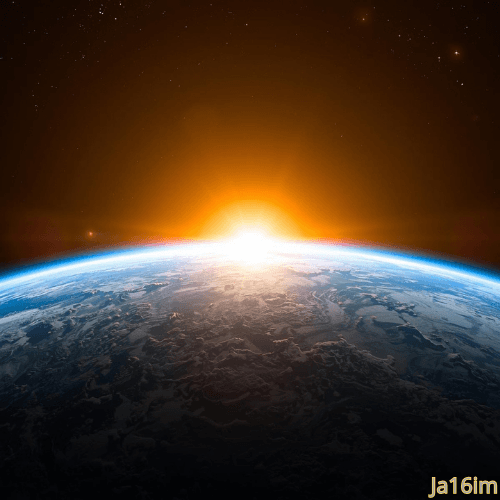
Reflections on Life Beneath the Crust and within Dark Worlds
In our collective imagination, the Sun is the ultimate giver of life—the celestial engine weaving threads of light that plants transform into matter and we transform into civilization. Our existence is tethered to the day; our biology is programmed to the rhythm of dawn and dusk. But what if that great lamp went out? Or what if humanity were forced to inhabit a “Rogue Planet” wandering alone in the biting cold of interstellar space, devoid of a mother star?
This is not merely a question of technical survival, but an inquiry into the very essence of life: Are we necessarily light-based beings, or is the human spirit capable of forging its own radiance from the abyss?
“We are children of the light by origin, but we are beings of adaptation by nature. In the absence of the Sun, life does not end; it redefines itself, seeking a pulse in the heat of matter rather than the glow of the photon.”
Chemistry of the Dark: Life Without Photosynthesis
Life on Earth’s surface depends almost entirely on the Sun via photosynthesis. However, in the deepest reaches of the oceans, where not a single beam of light dares to penetrate, science has discovered breathtaking oases of life. There, organisms thrive on chemosynthesis, deriving energy from hydrothermal volcanic vents on the seafloor.
These creatures open a window for contemplation: If a planet possesses internal heat—driven by radioactive decay in its core—then surviving without a sun means transitioning from a “surface civilization” to a “subterranean civilization.” Through technology, humanity could replace solar light with fusion reactors or tap into geothermal energy to create cities beneath the planetary crust, shielded from the absolute zero of space.
Dark Biology: The Psychological and Physical Toll
Living without the Sun is more than an energy challenge. Our bodies are “biological clocks” tuned to light. Its absence leads to a disruption of hormones like melatonin (sleep) and serotonin (happiness), as well as a deficiency in Vitamin D, which our skin synthesizes through light.
In dark worlds, humans would have to recreate their “circadian rhythm” using artificial light that mimics the solar spectrum. But would our dreams remain the same without an open horizon? The human psyche, which has drawn its art and philosophy from sunrises and the vastness of the sky, might suffer from a “spiritual confinement” within closed underground metropolises.
The Rogue Planet Hypothesis: Astronomers estimate there are billions of planets that do not orbit any star. Some may retain liquid oceans beneath thick layers of ice due to internal heat. If humans were to colonize such a world, they would live in a state of “eternal night,” relying entirely on artificial intelligence and the taming of the planet’s core temperature.
✦ ✦ ✦
A Contemplation of Identity: Will We Remain Human?
After generations of living without a sun, the human form might change. Our pupils might expand to capture the faintest glimmer, or the sense of sight might diminish in favor of other senses sharpened by the dark. But the deepest change would be in “Meaning.”
The Sun has always been a symbol of clarity, truth, and unity. In its absence, we might become beings more focused on the “Internal.” Living without a sun is a test of the consciousness’s ability to create its own sun. As philosophers of old said: the true light is that which springs from the mind, not that which falls upon the eye.
Conclusion: The Light That Never Fails
Humanity is capable of living without a physical sun, thanks to our unique ability to manipulate matter and transform energy. However, survival in the dark requires a different kind of light: the light of science that illuminates the paths of technology, and the light of art that colors the walls of our cosmic shelters.
The Sun may be our first home, but our destiny may lie in discovering that we carry the light within our genes and in a curiosity that knows no night. We are not merely shadows of the Sun; we are a burning fire, capable of illuminating the darkest corners of the universe.
Writing & Reflection: Jassim Al-Saffar
Digital Identity: Ja16im
A meditative artist and philosophical writer exploring the symbolism of perception and meaning through digital art, bilingual books, and speculative scientific essays.
- Limits of Human Cognition: Why Truth May Be Beyond the Mind
- Limits of Human Cognition: Cognitive Closure and Hidden Reality
- The Event Horizon of the Mind: What the Brain Cannot Imagine
- Beyond Earth: Can Humanity Become an Interstellar Species?
- The Final Sunset: What Happens to Humanity When the Sun Dies?
