
The Subjective Clock: Why Time Speeds Up
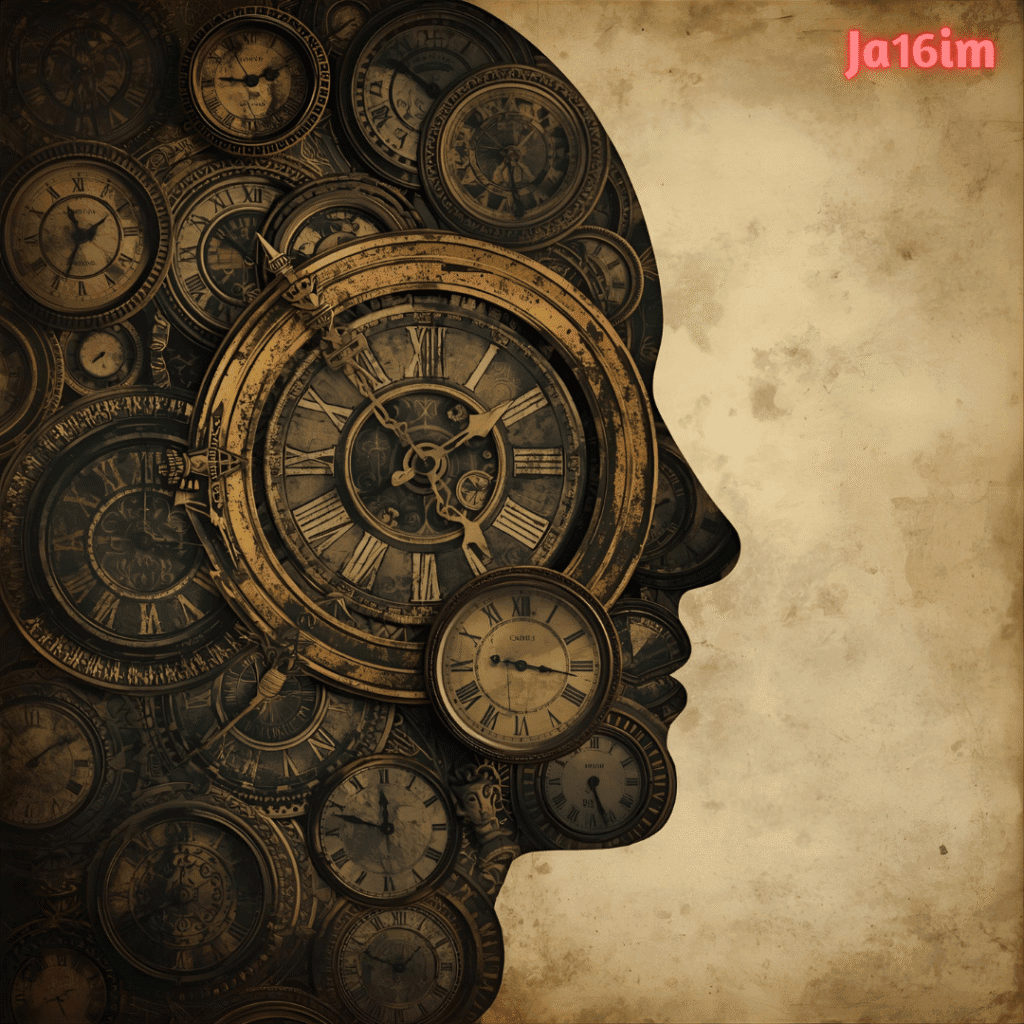
Although the clock hands move at the same fixed pace for everyone, the experience of time is one of the most subjective and variable human experiences. A day spent in boredom can feel like an eternity, while a year of happiness can pass in the blink of an eye. This variation proves that **time is not an objective entity we live through, but a psychological and cognitive construct created by the brain**. Understanding our perception of time leads us to the key to improving our quality of life: controlling our attention.
We do not complain about a lack of time, but about a lack of awareness of the moment.
🔬 Science Explains the Difference: The Internal Clock and Neurochemicals
The brain relies on complex mechanisms to build our sense of time
And this construction is influenced by several key biological and psychological factors:
- Dopamine Levels and Acceleration with Age: One of the main hypotheses explaining why time seems to speed up as we age is the decrease in the production of the neurotransmitter **dopamine**. Dopamine is essential for recording new experiences. When we are young, everything is novel and stimulating, leading to a dopamine surge and the feeling that time is passing slowly (because the mind records more information per second). As we grow older, new experiences decrease, dopamine levels drop, and fewer memories are recorded, making time seem to “accelerate.”
- The Power of Attention and Focus: Attention is the lens of time. When we are fully engaged in a task requiring deep concentration (the Flow State), time seems to fly. Conversely, when we are bored or anticipating something, the brain focuses on the passage of time itself, making minutes feel like hours.
- Emotional Impact (Fear and Trauma): In moments of danger or shock, time appears to slow down significantly. This deceleration is a survival mechanism; the brain floods the sensory system with an avalanche of information, allowing the conscious mind to process a vast number of details in a fraction of a second to increase the chances of survival.
✨ Time as a Philosophical Construct: The Importance of Experiential Density
From a contemplative and philosophical perspective, our perception of time is directly influenced by the density of human experience:
- Comparison with the Past: We measure the new year against the quantity of memories recorded in previous years. A new year filled with routine contrasts with a past year filled with unique experiences (as in childhood), making the new year seem very short.
- Living in the Present (The Now): Contemplative philosophies emphasize that the only absolute time is the present moment. Our perception of time slows down as we increase our awareness and focus on the current moment, detached from regret about the past or anxiety about the future.
- Meaning as a Slowing Agent: When life is filled with meaning and purpose, every moment is lived with deeper gratitude and awareness, making the experience of life feel slower and richer. Forgetting occurs when days are similar and devoid of meaning.
In conclusion
We cannot control the hands of the world’s clock
But we have full control over the rhythm of our internal mental clock.
The key to slowing down time and making it more fulfilling lies in **enriching our experience
Seeking novelty, and consciously directing our attention to the present moment**.
When we are aware, time becomes a vast space for growth, not just a race that ends in oblivion.
Remember: Meaning is the journey itself, not the destination. And the meaning we create is what immortalizes us.
Writing and Contemplation: Jassim Alsaffar
Digital Identity: Ja16im
A contemplative artist and philosophical writer exploring the symbolism of perception and meaning through digital art, bilingual books, and contemplative scientific articles.
- Limits of Human Cognition: Why Truth May Be Beyond the Mind
- Limits of Human Cognition: Cognitive Closure and Hidden Reality
- The Event Horizon of the Mind: What the Brain Cannot Imagine
- Beyond Earth: Can Humanity Become an Interstellar Species?
- The Final Sunset: What Happens to Humanity When the Sun Dies?
