
Emotion: The Fabric of Consciousness
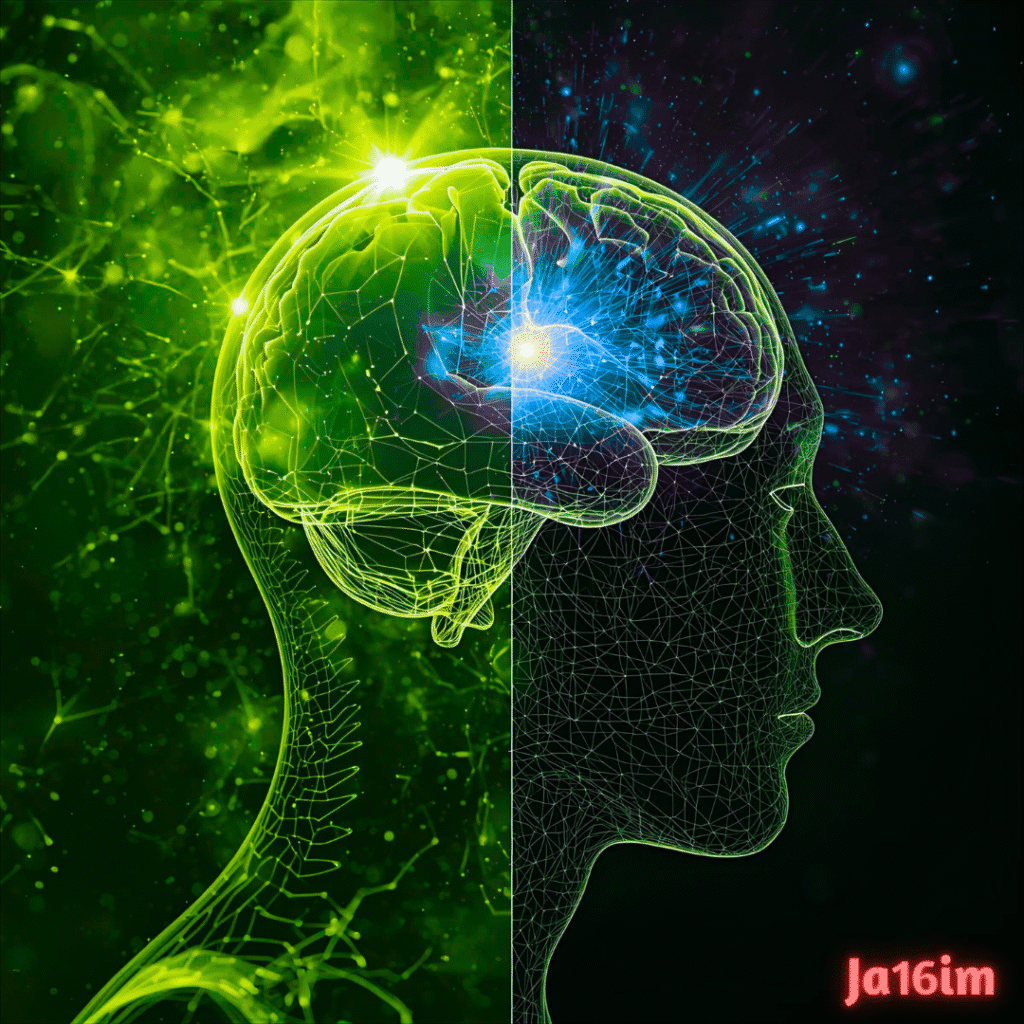
For a long time, we viewed the mind as a cold, logical machine, while emotion was considered mere “noise” or a secondary reaction that obstructed sound thinking. However, recent studies in neuroscience and philosophy reject this duality, confirming that **emotion is not separate from consciousness; it is the woven fabric of consciousness**. Consciousness is not just the perception of “what is happening,” but the perception of “how I feel about what is happening.” Emotion is what gives perception its color, value, and meaning.
We do not think to understand; we feel to understand deeper.
🔬 Neuroscience: Emotion as a Bridge to Consciousness and Decision
Neuroscience confirms that feelings are not merely a byproduct; they are a critical component in decision-making and the formation of self-awareness:
- Valuing Significance: The Limbic System, especially the Amygdala, acts as an “evaluator” of every experience. Emotion determines what is important and what is irrelevant in the deluge of information we receive. This emotional assessment is what makes us focus our attention and form meaningful memories.
- Bridge Between Logic and the Body: Emotion is the bridge connecting abstract thought to the physical state. It translates an idea into a physiological response (accelerated heartbeat, muscle tension), grounding consciousness in the body and making the experience subjective and real. Without this emotional embodiment, thoughts become faint and valueless for survival.
- Self-Awareness: The awareness of the existence of an “I” begins with feeling. Our recognition of our internal emotional state (I am sad, I am scared, I am happy) is the first level of self-awareness, and the foundation for all subsequent perception.
✨ Philosophy: Emotion as the Core of Meaning and Humanity
From a philosophical perspective, the human experience cannot be separated from its feelings. Emotion is what gives life its depth and singularity:
- **Qualia and Subjective Sensation:** Emotion is what grants perception its “subjective quality.” Consciousness is not limited to knowing that “this object is red,” but extends to how we *feel* the color red. This internal, unmeasurable feeling is the essence of consciousness, and its primary source is emotion.
- **Emotion as a Moral Compass:** Emotion, especially empathy, is the driving force behind ethics and society. There can be no advanced consciousness without the ability to feel the pains and joys of others. Emotion is what gives us the motivation to act for meaning and justice.
- Emotional Consciousness as Latent Power: The highest stages of consciousness development (often referred to as Emotional Intelligence) is the ability to understand and regulate our own and others’ emotions. This emotional integration is what enables wise decisions that transcend pure logic and take into account human complexities.
In conclusion
The relationship between emotion and consciousness is essential, not incidental. Emotion is the language our consciousness speaks to our body and to the world.
The pursuit of deeper consciousness is not a purely rational journey, but an emotional one as well, requiring the courage to feel all the complexities of human emotions
Because in this feeling lies the key to understanding our existence and how to create meaning.
Remember: Meaning is the journey itself, not the destination. And the meaning we create is what immortalizes us.
Writing and Contemplation: Jassim Alsaffar
Digital Identity: Ja16im
A contemplative artist and philosophical writer exploring the symbolism of perception and meaning through digital art, bilingual books, and contemplative scientific articles.
- Limits of Human Cognition: Why Truth May Be Beyond the Mind
- Limits of Human Cognition: Cognitive Closure and Hidden Reality
- The Event Horizon of the Mind: What the Brain Cannot Imagine
- Beyond Earth: Can Humanity Become an Interstellar Species?
- The Final Sunset: What Happens to Humanity When the Sun Dies?
