
ESP and Science: The Debate Over Unseen Perception
Extra-Sensory Perception (ESP), or what is popularly known as the “sixth sense,”
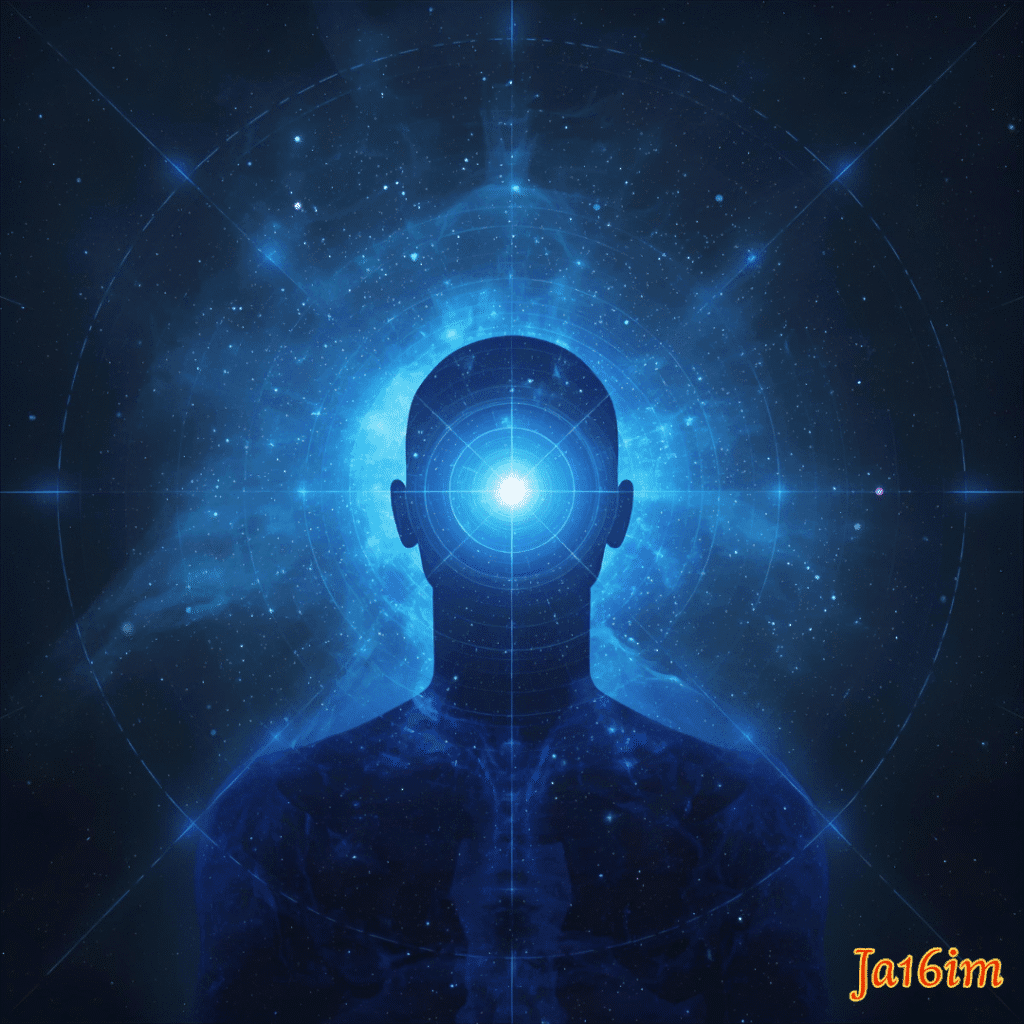
Is one of the most controversial phenomena in the human experience. It encompasses alleged abilities such as **Telepathy** (reading minds), **Clairvoyance** (seeing distant events), and **Precognition** (predicting the future). While popular stories often speak of extraordinary psychic links, science maintains a strict stance, demanding empirical proof. The question of ESP’s existence is fundamentally a question about the **limits of human perception**:
Are we constrained by the five known sensory channels, or are there unseen conduits through which meaning and experience pass?
ESP is not just a phenomenon; it is a symbol of humanity’s desire to transcend the constraints of the body.
🔬 Parapsychology and Attempts at Measurement
In the 20th century, parapsychology, as a controversial branch of study, attempted to subject these phenomena to the scientific method. Among the most notable attempts were the Zener Card experiments conducted by J.B. Rhine at Duke University. These trials aimed to measure participants’ ability to predict the pattern on a card without seeing it. Some early studies reported statistical results exceeding the level of chance:
- Guessing Experiments: Some results showed that certain individuals scored a much higher percentage of correct guesses than allowed by random chance, leading proponents to conclude that some form of ESP exists.
- The Ganzfeld Protocol: This is a more modern technique designed to acoustically and visually isolate the participant (by using white noise headphones and eye covers) to reduce sensory “noise,” which is believed to facilitate the “reception” of mental messages.
⚔️ The Scientific Method: The Crisis of Replication and Lack of Mechanism
Despite the excitement generated by early results
The general scientific consensus remains unchanged:
there is no compelling evidence for the existence of ESP. This rejection stems from several methodological and scientific challenges:
- The Replication Crisis: The vast majority of subsequent, peer-reviewed research has failed to replicate the positive results reported in the initial studies. Replication is the cornerstone of the scientific method, and failure to reproduce the phenomenon implies that the original results were likely due to methodological errors or statistical biases (the File Drawer Effect).
- Absence of a Mechanism: Science has been unable to identify any physical or biological mechanism that could explain how mental information transfers from one brain to another, or how information about the future could be received. Neural impulses and electromagnetic waves dissipate quickly and cannot traverse the distances required for ESP.
- Cognitive Biases: Cognitive psychology explains many ESP experiences as products of human biases, such as **Confirmation Bias** (where we only remember successes and forget failures), or the **selective recall** of events that appear to have been predicted only after they occurred.
✨ Conclusion: The Continuous Search for Connection
Currently, ESP remains a phenomenon outside the boundaries of mainstream science
Categorized as pseudoscience due to the lack of robust, repeatable evidence. Nevertheless, humanity’s insistence on searching for non-sensory channels of perception reflects a deeper existential need:
The desire for absolute connection and unity with the cosmos and others. Whether ESP is a physical reality or merely a symbol of our yearning to break the constraints of matter
The search itself opens the door to contemplating our limits and our unexplored potential.
Remember: Meaning is the journey itself, not the destination. And the meaning we create is what immortalizes us.
Writing and Contemplation: Jassim Alsaffar
Digital Identity: Ja16im
A contemplative artist and philosophical writer exploring the symbolism of perception and meaning through digital art, bilingual books, and contemplative scientific articles.
- Limits of Human Cognition: Why Truth May Be Beyond the Mind
- Limits of Human Cognition: Cognitive Closure and Hidden Reality
- The Event Horizon of the Mind: What the Brain Cannot Imagine
- Beyond Earth: Can Humanity Become an Interstellar Species?
- The Final Sunset: What Happens to Humanity When the Sun Dies?
