
Life on Mars: A New Genesis or an Eternal Exile?
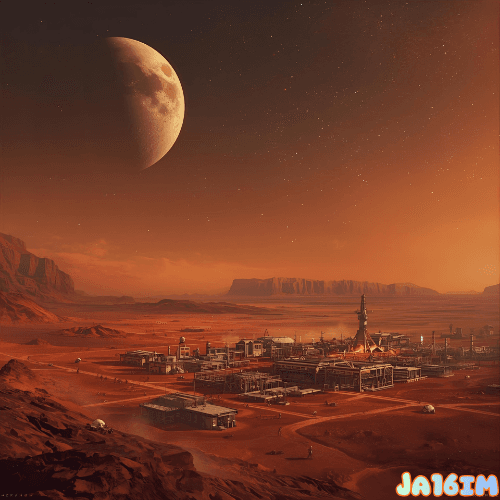
Mars, that rusty bead suspended in our night sky, has long captivated poets and dreamers. Today, it has become the tangible target of engineers and astronauts. The discourse around colonizing Mars has shifted from science fiction to business plans for entities like SpaceX and NASA. Yet, behind the glossy renderings of glass-domed colonies lies a stark, unglamorous truth: Mars is a dead planet, and it is actively trying to kill you.
Moving to Mars is not merely a change of postal code; it is a total rewrite of human biology and psychology. We are creatures exquisitely designed by evolution to thrive under specific atmospheric pressure, gravity, and magnetic protection provided by Earth. What happens, then, when we rip humanity from the womb of Mother Earth and cast it into a frozen cosmic desert?
“We do not go to Mars to escape Earth’s problems, but to discover if the human spirit can bloom in soil it was never meant to touch.”
The Forgotten Body: Gravity and Biology
The first and most persistent challenge is gravity. Martian gravity is only 38% of Earth’s. While the sensation of lightness might initially seem euphoric, for our bodies, it is a slow-motion disaster. Bones and muscles operate on a “use it or lose it” principle. In the absence of the heavy load of Earth’s gravity, the body begins to discard calcium, leading to rapid and severe osteoporosis.
Data from the International Space Station, including the NASA Twin Study, indicates that astronauts lose muscle mass and bone density at alarming rates unless they exercise for hours daily. On Mars, this degradation could be permanent. Children born there might grow tall and frail, their physiology so adapted to low gravity that a “return” visit to Earth would be impossible—our home planet’s gravity would crush them.
The Invisible Enemy: Radiation
Earth possesses a magnetic shield and a thick atmosphere that protect us from cosmic rays and solar winds. Mars has neither. Early settlers will be exposed to radiation doses that exponentially increase the risk of cancer and central nervous system damage.
Life on Mars will not be lived under transparent domes gazing at the stars as movies suggest; ironically, it will be a life lived underground, inside lava tubes, or buried beneath thick layers of regolith to shield against this lethal cosmic rain.
The Psychological Abyss: The “Earth-Out-of-View” Phenomenon
If biological challenges can be mitigated by technology and medicine, psychological challenges remain the unmapped territory that could break the human will. Astronauts on the ISS can look out the window and see Earth—a beautiful, comforting blue marble. This visual connection provides a grounding sense of safety, known as the “Overview Effect.”
On Mars, Earth will be reduced to a “pale blue dot” in the sky, indistinguishable from any other star. This total visual disconnection may trigger a new form of existential depression psychologists call the “Earth-out-of-view” phenomenon.
Isolation and the Death of Spontaneity
Imagine sending a message saying “I love you” or “Help, we have a breach,” and waiting 20 minutes for it to arrive, then another 20 minutes for a reply. This time delay (ranging from 4 to 24 minutes depending on planetary alignment) kills spontaneity. Settlers will be entirely alone in facing emergencies.
Furthermore, living in confined spaces with the same small group of people for years, unable to step outside for fresh air or feel a breeze on one’s face, places immense strain on mental health. Terrestrial analogues like the HI-SEAS mission in Hawaii have shown that isolation quickly leads to stress, conflict, and social withdrawal.
“In the absolute silence of Mars, one will hear nothing but the echo of their own thoughts. The true challenge is not terraforming the planet, but terraforming the human mind to endure the void.”
Diary of a Martian: The Daily Grind
Daily life on Mars will be a rigorous routine of survival. There will be no “fresh food” in the traditional sense; sustenance will rely on genetically modified plants grown in hydroponic farms under artificial light, and lab-cultured meat. Water will be the ultimate currency, with every drop—from sweat to urine—recycled with efficiency exceeding 98%.
Aesthetics will shift as well. There will be no natural green, no blue sky (the Martian sky is a dusty pink by day and blue only at sunset). Artists and architects will have to invent new ways to bring color and life into hermetically sealed environments to combat sensory deprivation.
The Rise of “Homo Martis”: Will We Speciate?
In the long term, if colonies survive, isolation and environmental pressures will drive evolution. Generations down the line, we may witness the emergence of “Homo Martis”. Taller frames, stronger hearts to pump blood in low gravity, and perhaps different skin pigmentation to resist radiation.
This biological divergence may one day lead to a cultural and political schism. Will Martians feel loyalty to a planet they have never seen? Or will they build a new civilization with values born from the harsh necessity of cooperation required for survival?
Conclusion: The Voyage into the Unknown
Going to Mars is humanity’s greatest adventure, but it is no picnic. It is a test of our ultimate adaptability. Mars may not be a paradise; life there will be harsh and ascetic. But the pursuit reflects the essence of what it means to be human: a being that refuses to accept the horizon as a limit.
Perhaps we do not go there to find life, but to bring it with us—to be the seeds of consciousness scattered by the cosmic wind into the barren desert of the universe.
- Limits of Human Cognition: Why Truth May Be Beyond the Mind
- Limits of Human Cognition: Cognitive Closure and Hidden Reality
- The Event Horizon of the Mind: What the Brain Cannot Imagine
- Beyond Earth: Can Humanity Become an Interstellar Species?
- The Final Sunset: What Happens to Humanity When the Sun Dies?
