
Intuition: Magic or High-Speed Math?
It happens suddenly: a vague sensation in the pit of your stomach warning you not to trust a stranger, or a flash of certainty driving you to make a life-changing decision without a shred of logical proof. We call it “intuition” or a “sixth sense,” often draping it in a veil of spiritual mystery.
But is intuition truly a message from the unknown? Or is it a mental process so precise and rapid that we simply cannot see the gears turning? Science leans heavily toward the second answer: Intuition is not magic; it is logic exceeding the speed of sound.
1. The Mind as a Giant Archive
The human brain is a biological machine obsessed with Pattern Recognition. Since the moment you were born, your brain has been harvesting data: vocal tones, subtle body language, outcomes of past decisions, and even atmospheric changes.
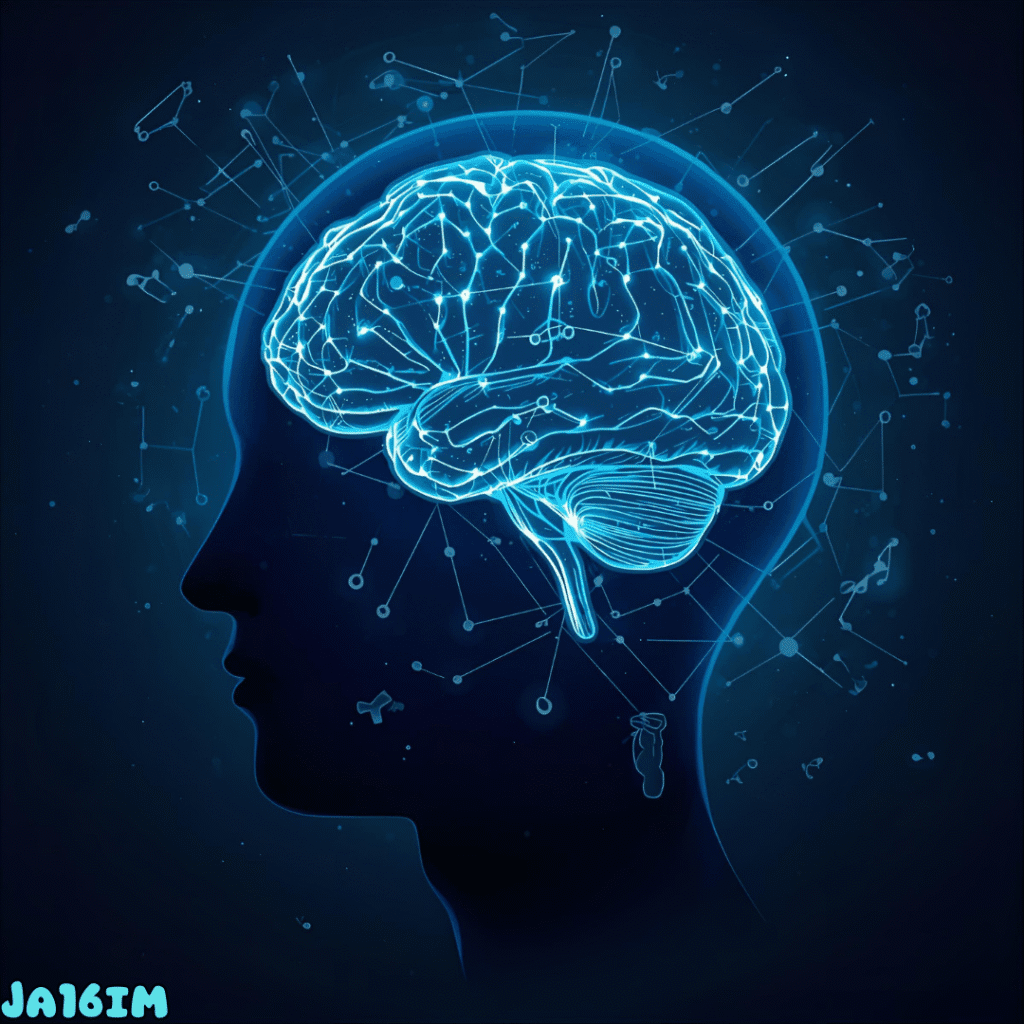
When you face a new situation, your subconscious mind scans this massive archive at the speed of light. If it finds a match between the current moment and a past pattern, it immediately sends you the result in the form of a “feeling.” What you call intuition is actually a complex calculation that compared millions of probabilities in a split second, delivering the conclusion without burdening you with the math.
2. Why Do We Feel It in Our “Gut”?
We often use the phrase “gut feeling.” Science confirms this is not merely a metaphor. Intuition is deeply linked to a brain region called the Basal Ganglia.
This area is responsible for storing habits and deep experiences, but—and here lies the paradox—it lacks direct connection to the brain’s verbal centers. It “knows” the answer but possesses no words to explain it. Therefore, instead of sending a sentence to your conscious mind, it sends physical signals (a tightened stomach, a racing heart) through the nervous system. Your body tells you the decision before your tongue can find the words to justify it.
3. The Chess Master and the Hidden Algorithm
In famous studies on professional chess players, scientists found that experts do not calculate every possible move (a theoretically impossible task). Instead, they rely on what they call “intuition.”
However, this intuition is not random; it is the result of storing over 50,000 patterns and board configurations in long-term memory. When the player looks at the board, they do not analyze; they “see” the solution. The brain here uses what psychologist Daniel Kahneman calls “System 1” thinking: automatic, fast, and energy-efficient, as opposed to slow, analytical thought.
4. When to Trust It?
The critical question remains: Is intuition always right? The scientific answer is: No.
Intuition is genius in “regular environments” where we have extensive experience (like a doctor diagnosing a familiar disease or a firefighter sensing a collapsing roof). In these cases, the stored patterns are accurate. However, intuition becomes disastrous in “random environments” or entirely new contexts (like the stock market or judging people from vastly different cultures). Here, the brain attempts to force old patterns onto a new reality that doesn’t fit, leading us into cognitive biases.
Conclusion: The Voice of Condensed Experience
We must stop viewing intuition as a supernatural power and start respecting it for what it truly is: a high density of intelligence and experience.
Intuition is your brain’s way of telling you it has seen this scene before and knows how it ends. It is not the abandonment of reason; it is reason liberated from the slowness of language, offering you knowledge that is pure, condensed, and immediate.
Writing & Reflection: Jasem Al-Saffar
Digital Identity: Ja16im
A meditative artist and philosophical writer exploring the symbolism of perception and meaning through digital art, bilingual books, and speculative scientific essays.
- Limits of Human Cognition: Why Truth May Be Beyond the Mind
- Limits of Human Cognition: Cognitive Closure and Hidden Reality
- The Event Horizon of the Mind: What the Brain Cannot Imagine
- Beyond Earth: Can Humanity Become an Interstellar Species?
- The Final Sunset: What Happens to Humanity When the Sun Dies?
