
The Psychological Impact of Microgravity and Isolation
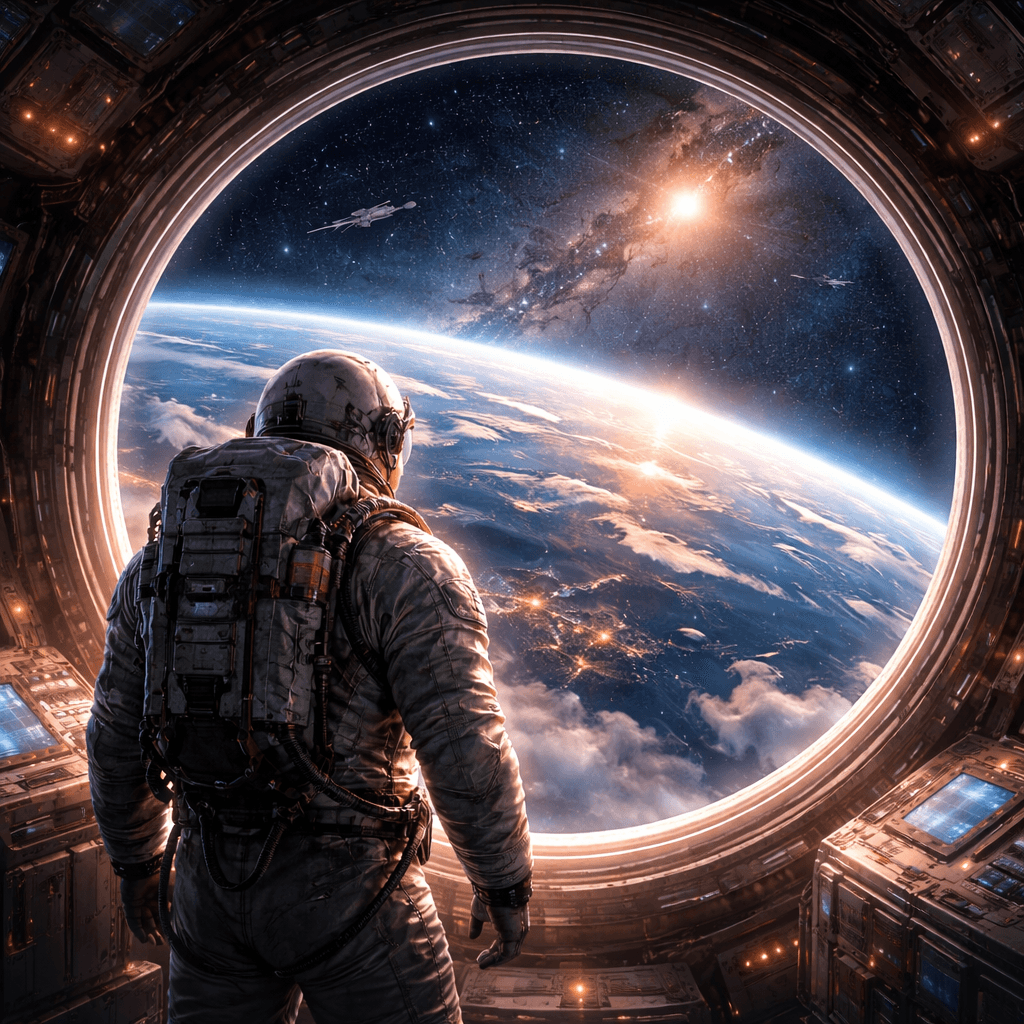 A meditative portrayal of an astronaut experiencing calm awareness in the silence of space
Beyond the biological effects on the body, space presents the human psyche with conditions unlike anything on Earth. Microgravity, prolonged isolation, and the absence of familiar rhythms place consciousness in an unfamiliar context—one that may subtly reshape personality, perception, and meaning.
Gravity as a Psychological Anchor
On Earth, gravity is so constant that we rarely notice it. Yet it silently structures our lives: how we move, how we orient ourselves, and how the brain integrates sensory information. In space, this anchor disappears.
Microgravity alters not only muscles and bones, but also neural processing. Without gravity, the brain must continuously reinterpret bodily signals. The result is not disorientation alone, but a gradual shift in self-perception—blurring boundaries between body, movement, and environment.
Isolation Beyond Loneliness
Space is not merely quiet—it is detached. Astronauts are removed from spontaneous social interaction, natural environments, and the subtle emotional feedback of everyday human presence.
This prolonged isolation does not simply produce loneliness; it often intensifies inner awareness. Psychological studies suggest that extended isolation can lead to heightened self-observation and deeper engagement with internal thought patterns.
“Space does not manufacture a new person. It removes familiar reference points, forcing the individual to encounter themselves without distraction.”
Time Without Earth
In orbit, the Sun may rise and set dozens of times in a single day. This disrupts the circadian rhythm, one of the most fundamental cognitive structures humans rely on. When time loses its familiar markers, sleep becomes irregular, days feel compressed, and memory subtly shifts.
The absence of normal temporal structure invites reflection—and sometimes detachment—from concerns that once felt central.
Seeing Earth from the Outside
One of the most profound psychological shifts reported by astronauts is known as the Overview Effect. Viewing Earth from space—small, borderless, suspended in darkness—can trigger a powerful cognitive and emotional response.
- A sense of global interconnectedness
- Reduced attachment to personal conflicts
- Heightened environmental awareness
This is not a fleeting emotional reaction. Many astronauts report long-lasting changes in values and priorities after returning to Earth. Perspective, it seems, can reconfigure personality.
Change or Revelation?
Does space travel change personality—or does it reveal aspects that remain hidden on Earth? From a psychological standpoint, extreme environments rarely create traits from nothing. Instead, they amplify existing tendencies and strip away social conditioning.
Implications for Future Missions
As humanity plans long-duration missions to Mars and beyond, this question becomes critical. Future astronauts will face years of confinement and sustained existential isolation. Success will depend not only on engineering, but on psychological resilience and the adaptability of consciousness.
Conclusion
Space travel does not alter human personality in simple or predictable ways. Instead, it places consciousness in conditions that challenge habitual identity.
In microgravity and isolation, many of the noise and pressures of Earth fall away. What remains is a quieter encounter with the self. Perhaps space does not change who we are. Perhaps it makes us see ourselves more clearly.
Writing & Reflection: Jassim Alsaffar
Digital Identity: Ja16im
A meditative artist and philosophical writer exploring perception and meaning through digital art, bilingual books, and reflective scientific essays.
- Limits of Human Cognition: Why Truth May Be Beyond the Mind
- Limits of Human Cognition: Cognitive Closure and Hidden Reality
- The Event Horizon of the Mind: What the Brain Cannot Imagine
- Beyond Earth: Can Humanity Become an Interstellar Species?
- The Final Sunset: What Happens to Humanity When the Sun Dies?

An enjoyable and beautiful article