
Can the Phone Change the Way We Think?
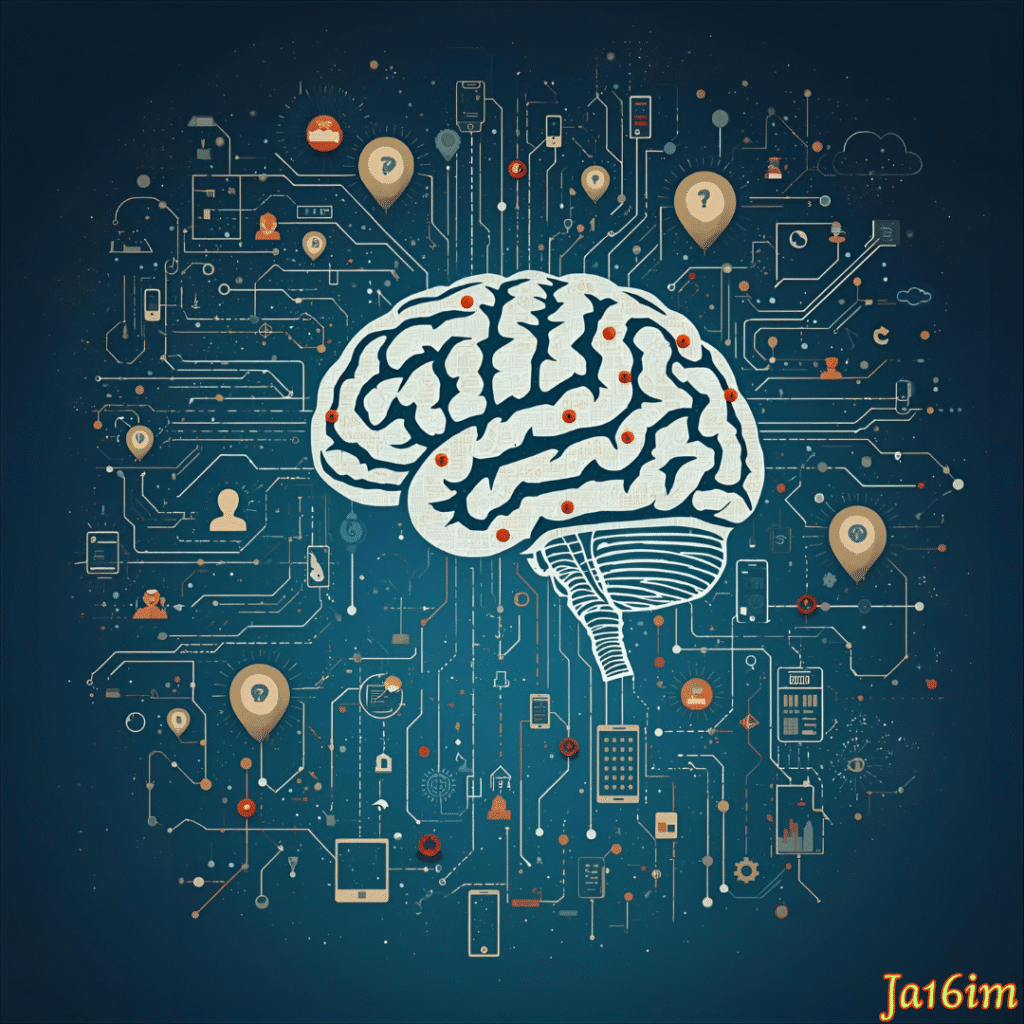
In two decades, the smartphone has evolved. It is no longer just a communication device. It is a cognitive extension deeply embedded in our identity. We carry more than phones; we carry pieces of our external mind.
This raises a deep question. Is this small screen reprogramming how we think? Neuroscience confirms that the change is already happening. Our cognitive priorities are shifting. They now align with the device’s rhythm: speed, interruption, and instant response.
Technology sorts information for us. But it is attempting to become the mind that interprets it.
🧠 1. The Cognitive Cost: Attention and Memory
The smartphone creates a digital environment. This environment taxes two vital mental functions:
-
Attention Fragmentation:
Our perceptual system craves deep focus. This is the Flow State. Yet, phones constantly expose us to notifications. This trains the brain for superficial navigation. We lose the capacity for critical thinking. We struggle with complex problems requiring sustained focus. -
Reliance on External Memory (Digital Amnesia):
Information is instantly available. Just one click away. Thus, the mind’s motivation to store it decreases. We encode less in long-term memory. This creates “digital amnesia.” We become better at knowing where to find facts rather than owning them.
🔗 2. The Extended Mind and Existential Shift
Philosophically, the phone is an extension of the self. This shift has existential implications:
-
Occupied Consciousness:
Silence builds meaning. Contemplation allows the Default Mode Network (DMN) to work. But phone usage fills every gap. We scroll in elevators and while waiting. This deprives the mind of rest. It hinders deep thought and wisdom. -
Changing the Nature of Questions:
The phone directs us to search. We seek quick answers on Google. We ask fewer deep questions. The mind adapts to this data. It becomes skilled at retrieval. However, it becomes less skilled at abstract analysis. -
The Digital Ego and Indoctrination:
The mind anticipates reality. Algorithms feed us personalized data. This confirms our current beliefs. It fuels Confirmation Bias. Consequently, we become less cognitively flexible. We become more prone to intellectual closure.
✨ Conclusion: The Conscious Choice
The phone is not inherently evil. Yet, it imposes its rhythm on our minds. We do not need to discard it. We must reclaim our cognitive sovereignty. The key is conscious choice.
Use the phone as a tool. Do not let it become a master. Preserving deep thought is vital. It is the most important battle of the digital age.
Meaning is the journey itself, not the destination. And the meaning we create is what immortalizes us.
- Limits of Human Cognition: Why Truth May Be Beyond the Mind
- Limits of Human Cognition: Cognitive Closure and Hidden Reality
- The Event Horizon of the Mind: What the Brain Cannot Imagine
- Beyond Earth: Can Humanity Become an Interstellar Species?
- The Final Sunset: What Happens to Humanity When the Sun Dies?
