
Time as a Perceptual Illusion: Does Your Mind Live in a Different Time?
“Time is not a river flowing from the past into the future; it is a mirror reflecting the state of your consciousness. When you suffer, it stretches. When you love, it evaporates. So, does the clock measure truth, or does it merely measure the collective illusion we have all agreed upon?”
Look at your watch right now. The seconds tick by with cold, mechanical regularity: tick, tock, tick. This is “Objective Time,” the foundation upon which humanity has built its civilizations, its trains, and its deadlines. Yet, have you ever sat in a sterile waiting room, feeling minutes drag into sticky hours that refuse to end? Or experienced a moment of embrace with a loved one where time seemed to stop completely, and the clock vanished from existence?
Here lies the great dilemma that has baffled physicists and mystics alike: there is time out there, and there is time in here. The terrifying question is: which one is real? And is it possible that the time we live is merely a “perceptual trick” woven by the brain to protect us from the chaos of eternity?
1. The Illusion of “Now”: Delaying the Live Broadcast of Reality
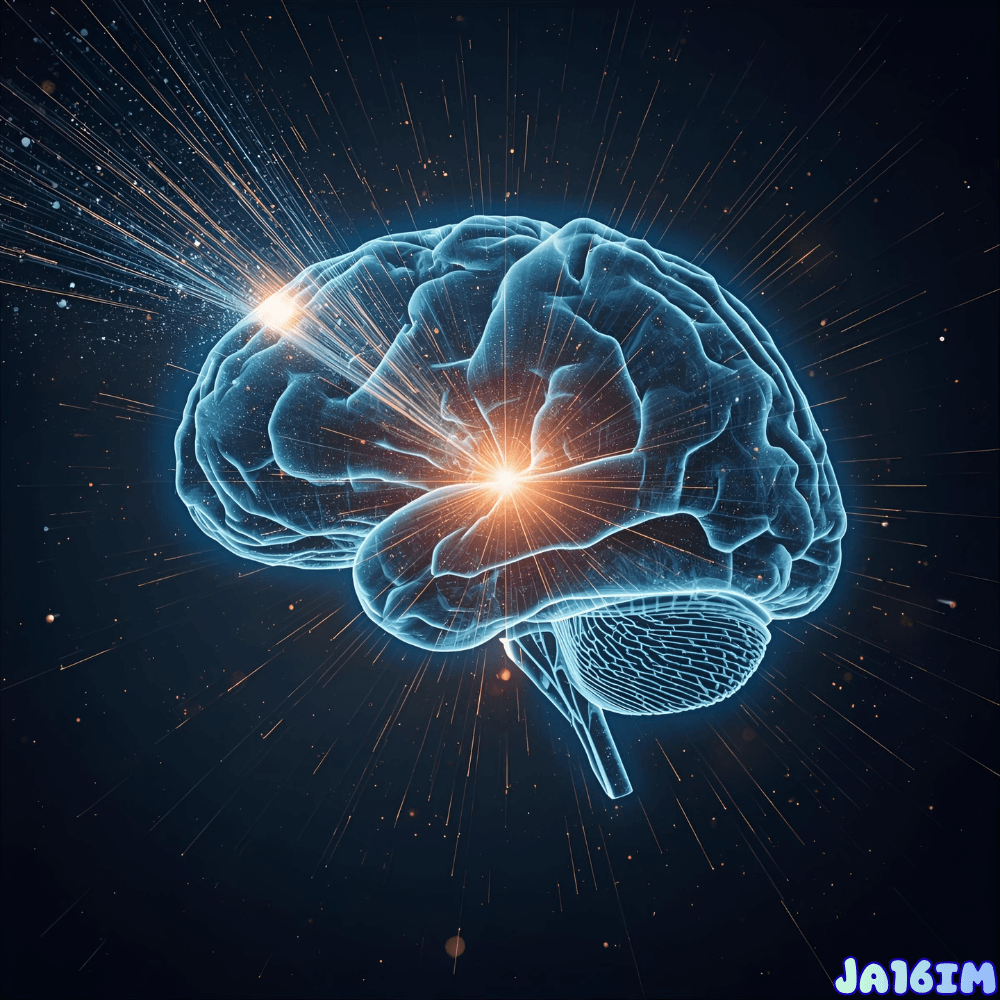
We believe we live in the present moment, in the immediate “Now.” But neuroscience tells us a shocking truth: You are always living in the past.
Your brain requires approximately 80 milliseconds to process visual and auditory information and integrate them into a coherent picture of reality. Light travels faster than sound, yet your brain “tricks” you by synchronizing the two events so they appear simultaneous (imagine someone clapping their hands). This means that the moment you perceive as “Now” has, in fact, already passed in the physical world.
“Our consciousness is a live broadcast slightly delayed from reality. We never touch the present; we only touch its immediate memory.”
Furthermore, the brain does not perceive time as a continuous stream, but rather as temporal “windows.” Studies suggest that the “present moment” in the human brain spans only about 2 to 3 seconds. This is the “Biological Now.” Anything longer becomes memory; anything shorter remains unperceived. Our life is not a continuous flow, but a series of discrete flashes expertly stitched together by the brain to create the illusion of continuity, much like film reels create motion from static images.
2. Personal Relativity: Why Time Slows Down in Accidents
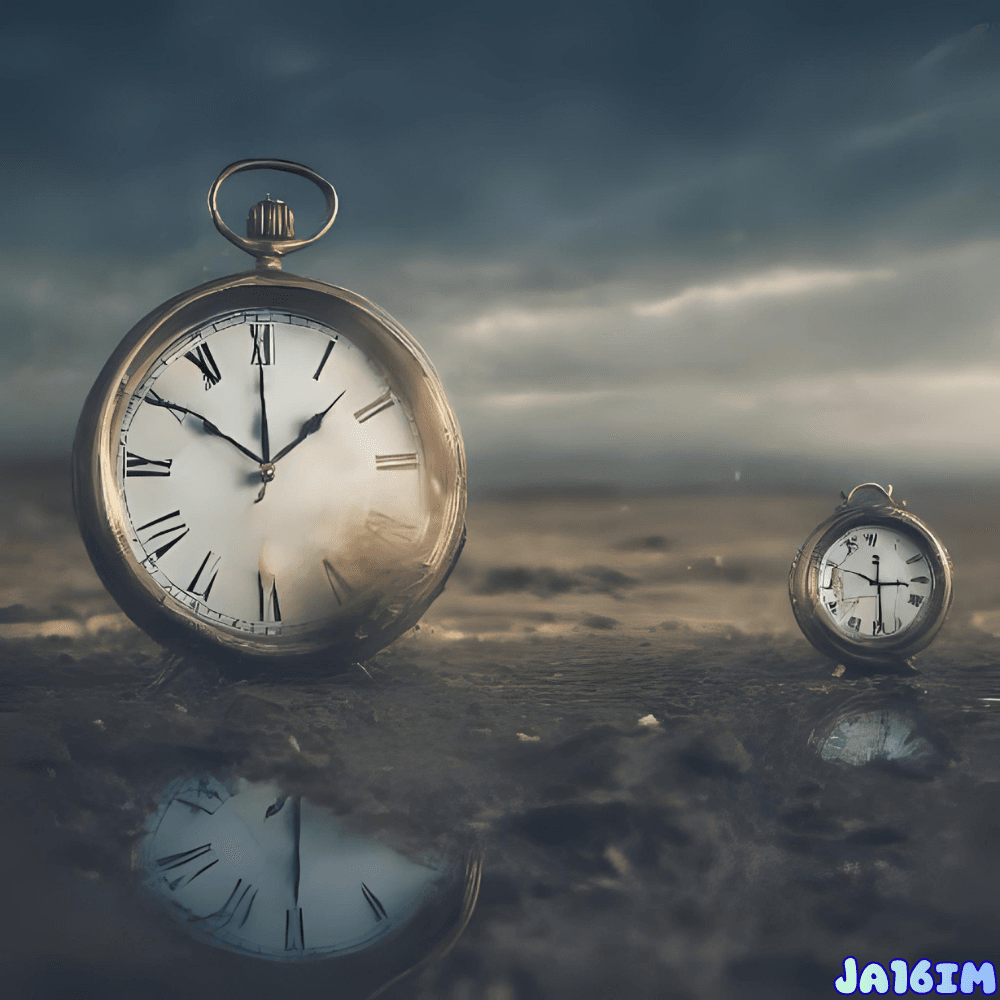
In 1905, Einstein detonated his intellectual bomb: “Time is relative.” It slows down the faster you move, stopping completely at the speed of light. But does the brain possess its own “Special Relativity”?
The answer is yes. When faced with mortal danger (a car accident, for example), many report a “Slow Motion” experience. They see glass shattering with agonizing slowness and hear sounds as if they are emerging from a deep well.
This is not magic; it is “processing condensation.” In moments of danger, the Amygdala activates, commanding the brain to record every minute detail in High Resolution to ensure survival. Because the brain records a massive amount of information in a single second, when it replays that memory later, that single second feels like a full minute.
Thus, internal time is not measured in minutes, but in the density of information and emotion.
- In Boredom: There is no new information, so time passes slowly while it happens, but shrinks in memory (because it is empty).
- In Adventure: There is an abundance of information, so time passes quickly while it happens, but expands in memory (because it is rich).
3. Physics and Time: Is the Future Already Here?
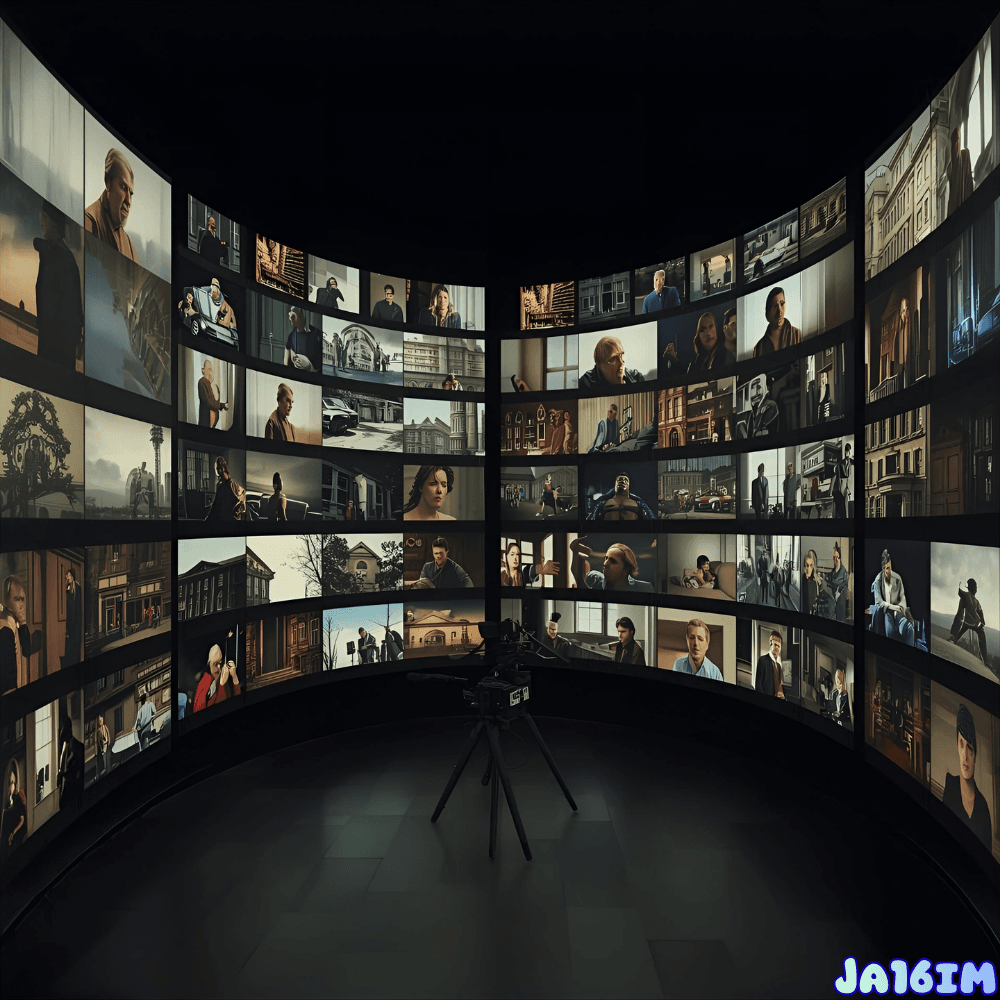
If we step out of the brain and into the cosmos, things get even stranger. In modern physics, there is a concept known as the **”Block Universe.”** According to this theory, the past, present, and future all exist simultaneously, much like every scene of a movie exists on the film reel before you watch it.
There is no “flow” of time in fundamental physics equations. The distinction between past and future is an illusion arising from the Second Law of Thermodynamics (the increase of entropy or disorder). We perceive time because we move from order to chaos (a broken cup does not reassemble itself).
“Einstein once wrote in a letter of condolence: ‘People like us, who believe in physics, know that the distinction between past, present, and future is only a stubbornly persistent illusion.'”
If this theory holds true, your “future” is not a blank page waiting to be written; it is a mountain already standing there in the mist, and you are simply walking toward it. Your consciousness is a “spotlight” illuminating one slice of “Space-Time” we call the Present, then moving to the next. Time does not pass; we pass through it.
4. The Grand Trick: Time and Identity
Why do we need time at all? Why did the mind evolve this complex illusion? The answer lies in the **Ego**. For an “I” to exist, there must be a story. And for a story to exist, there must be an order: birth, childhood, youth, old age. Time is the string that holds the beads of our identity together. Without time, our memories scatter, and we disintegrate.
Yet, mystics and sages throughout the ages have realized that this “Psychological Time” is the root of suffering.
- Depression: Is living excessively in the past (dead time).
- Anxiety: Is living excessively in the future (unborn time).
- Peace: Is being fully present in the “Now” (timelessness).
When a person enters deep meditation, or a **Flow State** during creation, time disappears. There is no longer a “before” or “after.” This is not a state of trance, but a state of “Hyper-Wakefulness.” It is the moment the mind stops “simulating time” and begins “living existence.”
5. Can We Hack Time?
We do not possess mechanical time machines, but we possess biological ones: **Memory and Imagination.** When you recall a painful event and relive the emotion, you are literally dragging your body and blood chemistry into the past. When you worry about tomorrow’s exam, you force your body to experience the stress of an event that has not yet occurred.
The deep philosophical question here is: If our consciousness is capable of traveling through psychological time, altering the body’s chemistry based on thoughts from different times, does this mean we are not prisoners of the present as we think?
Perhaps the next step in the evolution of human consciousness is the shift from “Linear Time Perception” (an arrow shooting forward) to “Circular” or “Holographic Time Perception,” where we realize that every moment we have lived or will live exists right now, in some layer of the cosmic consciousness.
Conclusion: Exiting the Clock
Time, as we know it, is a social agreement and a biological necessity, but it is not an absolute truth. It is the lens through which we view the world, not the world itself.
The universe has no clock. The universe has **Rhythm**. And the difference is profound. The clock divides and fragments; rhythm connects and unifies. Try a small exercise today: take off your watch (both real and metaphorical). Stop looking at time as an enemy chasing you, and start seeing it as a space that embraces you.
Live the moment not because it is “all you have,” but because it is the “only window” through which you can glimpse eternity. In the end, time might just be a game consciousness plays with itself, so that everything doesn’t happen all at once.
Written and conceived by: Jassim Alsaffar
Digital Identity: Ja16im
A meditative artist and philosophical writer exploring the symbolism of perception and meaning through digital art, bilingual books, and reflective scientific essays.
- Limits of Human Cognition: Why Truth May Be Beyond the Mind
- Limits of Human Cognition: Cognitive Closure and Hidden Reality
- The Event Horizon of the Mind: What the Brain Cannot Imagine
- Beyond Earth: Can Humanity Become an Interstellar Species?
- The Final Sunset: What Happens to Humanity When the Sun Dies?
