
Universal Dreams: Science, Survival, and the Unconscious
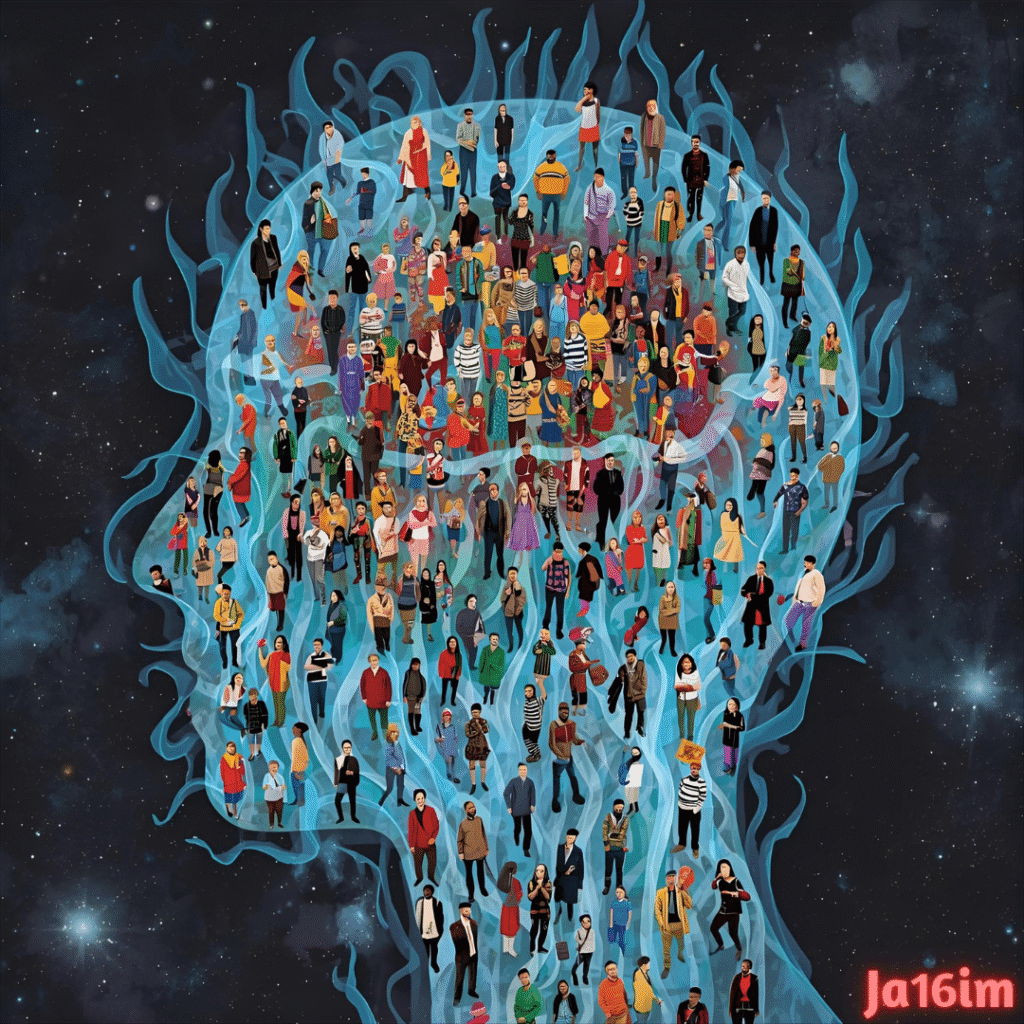
Despite the vast differences in languages, beliefs, and ways of life across cultures, one phenomenon profoundly unifies the human experience: dreams. We find dreams of falling, being chased, losing teeth, or being unprepared for an exam recurring surprisingly often in the minds of people from New York to Nairobi. These shared dreams are not mere coincidence; they are strong evidence that we possess a **collective unconscious**, a single biological and psychological operating system that pulses beneath the complex surface of cultural identity. It is the fundamental language of the self, unbound by cultural constraints.
Dreams are the messages sent by the unconscious to us through universally agreed-upon symbols.
🧠 The Biological Mind: Shared Simulation Function
Neuroscience and evolutionary psychology explain a large part of these similar dreams through fundamental brain functions necessary for survival:
- Threat Simulation Theory: This theory posits that dreams, particularly those of being chased or falling, are an evolutionary mechanism. The brain uses a safe environment (the dream) to simulate threats common to human existence (threats faced across generations, like falling from a height or fleeing a predator). This “safe training” helps improve our emotional and behavioral responses in waking life.
- Memory Consolidation and Learning: The Rapid Eye Movement (REM Sleep) stage, where most dreams occur, is a crucial phase for consolidating memories and cognitive learning. These fundamental processes for information processing are biologically regulated in a unified way across all humans.
- Body-Linked Dreams: Certain dreams, such as losing teeth, are interpreted by neuroscientific theories as a response to a common internal “feeling,” such as anxiety about appearance, or a feeling of powerlessness (as tooth loss is historically linked to the loss of strength/survival capability).
👤 Psychoanalysis: Jung’s Archetypes
The deepest explanation for our similar dreams comes from Swiss psychoanalyst Carl Jung’s theory of the Collective Unconscious. Jung hypothesized that the human mind possesses an inherited, impersonal layer of shared experiences and conceptions:
- The Collective Unconscious: This is the repository of experiences inherited from our ancestors as a species. These experiences form universal patterns called **Archetypes**.
- Archetypes as Symbols: These models appear in dreams as recurrent, unified symbols: **The Shadow** appears as a pursuer (chase dreams), **The Wise Old Man** appears as a guide, and the symbol of **Water** represents the unconscious itself. These inherited symbols make the dream structure similar across ages and cultures.
- Nakedness and Shame Dreams: Dreams of public nakedness are typically not about literal nudity, but about the universal existential anxiety regarding vulnerability, feeling “exposed” to criticism, or the fear of having our flaws (the Shadow) revealed to society.
✨ Conclusion: Unity of the Self and Existential Interconnectedness
The recurrence of universal dreams is a testament to our psychological unity.
Similar dreams are a reminder that, fundamentally
We share the same evolutionary concerns and the same search for meaning and identity.
Decoding these dreams is not just psychoanalysis; it is a means of communicating
With the deepest layer of the human self, the layer that knows no cultural boundaries.
Remember: Meaning is the journey itself, not the destination. And the meaning we create is what immortalizes us.
Writing and Contemplation: Jassim Alsaffar
Digital Identity: Ja16im
A contemplative artist and philosophical writer exploring the symbolism of perception
And meaning through digital art, bilingual books, and contemplative scientific articles.
- Limits of Human Cognition: Why Truth May Be Beyond the Mind
- Limits of Human Cognition: Cognitive Closure and Hidden Reality
- The Event Horizon of the Mind: What the Brain Cannot Imagine
- Beyond Earth: Can Humanity Become an Interstellar Species?
- The Final Sunset: What Happens to Humanity When the Sun Dies?
