
Reflections on the Relationship Between Spirituality and the Universe
From the moment humans first looked up at the night sky, the cosmos was never perceived as empty space alone. Long before telescopes and equations, the stars were symbols, questions, and silent companions to human thought. Even today, despite our advanced scientific understanding of the universe, many people continue to associate the vastness of space with something spiritual, meaningful, or transcendent.
Why does this connection persist? And what does it reveal—not about the universe itself—but about the human mind?
The Universe as Science Describes It
From a scientific perspective, the universe is governed by physical laws: gravity, energy, space, and time. Modern cosmology offers no evidence that the universe possesses consciousness, intention, or a “soul” in any measurable sense. Space does not think, feel, or respond. It simply exists, unfolding according to mathematical principles.
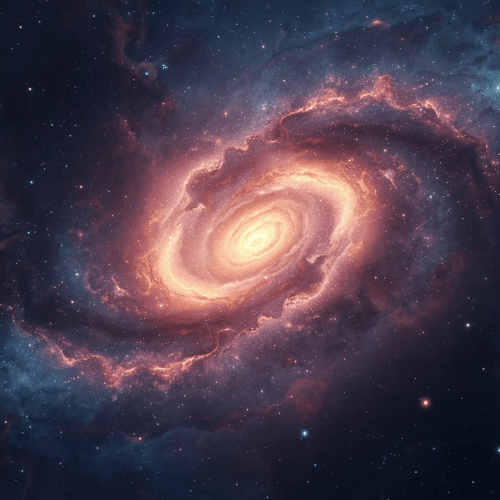
Yet human experience does not stop at equations. When individuals encounter images of distant galaxies or contemplate the immensity of cosmic time, many report emotions that go beyond rational understanding. This gap between scientific explanation and subjective experience is where spirituality often emerges.
Awe: The Psychological Bridge Between Space and Meaning
Psychology provides an important clue. Researchers describe a mental state known as awe—a response triggered by encounters with vastness that challenge our usual frameworks of understanding. Awe tends to:
- Reduce self-centered thinking
- Increase feelings of connectedness
- Create a sense of meaning beyond the individual
The cosmos is one of the most powerful generators of this state. The night sky, the scale of galaxies, and the realization of humanity’s smallness can momentarily dissolve the boundaries of the self. This experience does not imply that the universe is spiritual, but that human perception becomes spiritual in response to it.
Is Spirituality an Evolutionary Response?
From an evolutionary and neurological perspective, the human brain evolved to search for patterns, meaning, and coherence. Facing an indifferent and unpredictable universe, early humans benefited psychologically from interpreting the unknown as meaningful rather than chaotic.
In this view, the link between cosmos and soul is not evidence of a spiritual universe, but of a meaning-seeking consciousness. Spiritual narratives may have offered emotional stability, social cohesion, and existential reassurance in the face of cosmic uncertainty.
This explanation does not invalidate spiritual experience—it reframes it as a deeply human cognitive response to vastness.
We Are Literally Made of the Cosmos
Science adds another layer to this connection. Modern astrophysics confirms that the elements composing our bodies—carbon, oxygen, iron—were forged in the cores of ancient stars. Every human being is, quite literally, formed from cosmic material.
This fact is scientifically established, yet symbolically powerful. When people say they feel “connected to the universe,” they are not expressing mysticism alone; they are intuitively responding to a physical truth. The universe is not our spiritual mirror—but it is our material origin.
Spirituality as an Inner Experience, Not a Cosmic Property
It is crucial to draw a clear distinction:
- There is no scientific evidence that the universe itself is conscious or spiritual.
- There is strong evidence that humans experience the universe spiritually.
Spirituality, in this sense, is not a property of space, but a mode of human awareness. It arises when perception reaches its limits—when logic encounters infinity, silence, and deep time. In these moments, the language of measurement gives way to the language of meaning.
Why Science Has Not Erased This Connection
One might expect that scientific progress would weaken spiritual interpretations of the cosmos. Instead, the opposite has happened. As our understanding expands, so does our sense of wonder.
Science explains how the universe works, but it rarely answers why existence feels meaningful. Spiritual reflection survives not as an alternative explanation, but as a parallel human response to the same reality science describes.
Conclusion: Is the Cosmos Spiritual—or Are We?
Perhaps the more honest question is not whether the universe has a soul, but why humans feel compelled to locate themselves within something larger than themselves.
The enduring link between spirituality and space reveals less about the nature of the cosmos and more about the nature of consciousness: a finite awareness confronting infinite scale, searching not for control, but for meaning.
The universe may be silent—but the human mind is not.
Signature
Written and conceived by: Jassim Alsaffar
Digital Identity: Ja16im
A meditative artist and philosophical writer exploring perception, meaning, and scientific inquiry through digital art, bilingual books, and reflective scientific essays.
- Limits of Human Cognition: Why Truth May Be Beyond the Mind
- Limits of Human Cognition: Cognitive Closure and Hidden Reality
- The Event Horizon of the Mind: What the Brain Cannot Imagine
- Beyond Earth: Can Humanity Become an Interstellar Species?
- The Final Sunset: What Happens to Humanity When the Sun Dies?

Reading this article is truly enjoyable.